You Won’t Believe This Fort City’s Hidden Architectural Gems
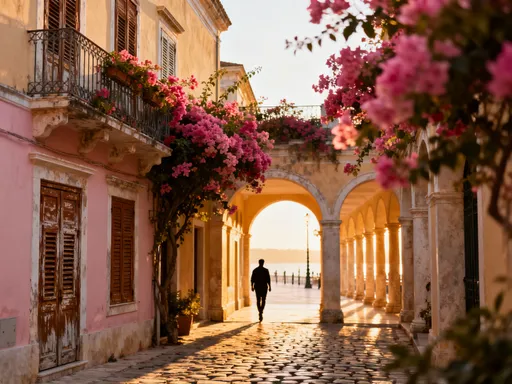
Walking through Galle, I felt like I’d stepped into a living museum—centuries-old walls whispering stories, Dutch balconies draped in tropical vines, and streets paved with history. The fusion of colonial charm and Sri Lankan soul makes its architecture unforgettable. If you're craving a destination where every corner reveals something unique, Galle delivers. This isn’t just old buildings—it’s a cultural mosaic carved in stone, wood, and time. Let me take you through the heart of its architectural magic.
Discovering Galle Fort: Where Time Stands Still
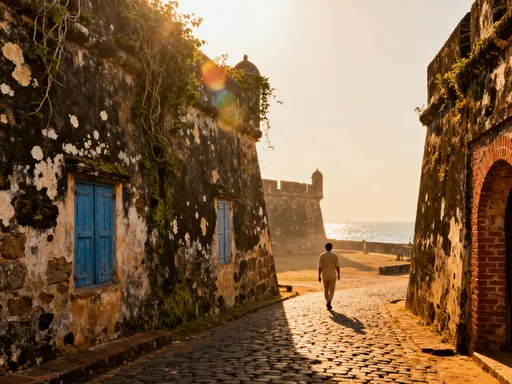
Galle Fort stands as one of South Asia’s most remarkable historical enclaves, a UNESCO World Heritage Site that has withstood not only the test of time but also the forces of nature and war. Originally constructed by the Portuguese in the 16th century as a defensive outpost against maritime threats, it was later expanded and fortified by the Dutch in the 17th and 18th centuries into the impressive stone citadel seen today. Rising from the southern coast of Sri Lanka, the fort is perched on a rocky promontory jutting into the Indian Ocean, its massive ramparts curving like a protective arm around the old city. These walls, some over 30 feet high and several meters thick, were engineered to resist cannon fire and monsoon waves alike, blending military precision with coastal resilience.
What makes Galle Fort truly captivating is how its architecture tells the story of layered occupation. The Portuguese laid the foundation, but it was the Dutch who shaped its enduring character—wide bastions for artillery, arched gateways, and a grid-like street plan designed for both defense and daily life. As sunlight glides across the weathered coral stone and granite facades in the early morning, shadows dance along narrow cobblestone lanes, evoking a sense of stepping into another era. The fort’s strategic location made it a prized possession for colonial powers, controlling key trade routes between Europe, India, and Southeast Asia. This geopolitical significance influenced every architectural decision—from the placement of watchtowers to the orientation of buildings facing the harbor.
Today, walking through the main entrance beneath the Dutch East India Company insignia, visitors are greeted by a living city within a fortress. Unlike static ruins, Galle Fort pulses with life—families, artisans, shopkeepers, and travelers coexist within its walls. The military function has long faded, yet the elegance of its design remains. Houses tucked behind arched doorways, cafes spilling onto verandas, and boutique hotels repurposed from colonial offices all reflect a delicate balance between preservation and progress. It is this harmony—between history and habitation—that defines the soul of Galle Fort, making it not merely a monument, but a continuing chapter in Sri Lanka’s architectural narrative.
Dutch Colonial Houses: Elegance Meets Tropical Adaptation
Among the most iconic features of Galle Fort are the two-story Dutch colonial houses that line its quiet streets, their presence a testament to both aesthetic refinement and practical ingenuity. These residences, built primarily during the 17th and 18th centuries, showcase a distinctive architectural style that seamlessly blends European design with tropical functionality. Characterized by high ceilings, large wooden windows, and spacious inner courtyards, these homes were designed to maximize airflow and minimize heat retention—a necessity in Sri Lanka’s humid coastal climate. Thick load-bearing walls made from coral stone and lime plaster provided insulation, while steeply pitched roofs covered in clay tiles allowed monsoon rains to run off efficiently, protecting the interiors from water damage.
One of the defining elements of these houses is the use of louvered shutters, which enabled residents to control ventilation and light while maintaining privacy and shielding interiors from direct sun and heavy rains. Many of these original features remain intact, preserved through careful restoration. Intricately carved teak doors, some adorned with floral motifs or geometric patterns, serve as entryways to homes that once belonged to merchants, officials, and naval officers. Inside, one can still find antique floor tiles—often imported from the Netherlands—featuring hand-painted designs in deep blues, reds, and ochres. These details speak to a time when craftsmanship was central to construction, and each home was a reflection of its owner’s status and taste.
What makes these buildings even more remarkable is their adaptive reuse in contemporary times. Rather than being frozen in time as museum pieces, many Dutch homes have been thoughtfully converted into boutique hotels, art galleries, and intimate cafes. A former warehouse might now house a design studio, its exposed beams and original flooring enhanced rather than replaced. A colonial residence could become a family-run guesthouse, where guests sleep beneath ceiling fans that turn slowly above antique four-poster beds. These transformations honor the past while serving modern needs, ensuring that the architecture remains relevant and lived-in. The success of such conversions lies in strict conservation guidelines that prohibit structural alterations and mandate the use of traditional materials and techniques, preserving the authenticity that makes Galle so special.
Religious Harmony in Stone: Temples, Mosques, and Churches Side by Side
Galle’s architectural landscape is not only defined by its colonial heritage but also by its profound religious diversity, visibly expressed through a harmonious coexistence of places of worship. Within the compact space of the fort and its immediate surroundings, one can find a Gothic-style Anglican church, a historic mosque with Mughal influences, and Buddhist temples rooted in Sinhalese tradition—all standing in peaceful proximity. This architectural tapestry reflects centuries of cultural integration, where different communities have lived, worshipped, and built side by side without erasing their distinct identities. The result is a cityscape that speaks not of division, but of quiet respect and shared history.
All Saints’ Church, consecrated in 1871, stands as a graceful example of British colonial ecclesiastical architecture. Built in the Gothic Revival style, it features pointed arches, stained-glass windows, and a tall bell tower that rises above the treetops. Inside, the cool stone interior and wooden pews create a serene atmosphere, while inscriptions on memorial plaques tell stories of past residents—missionaries, soldiers, and civil servants. Though it served the Christian community, particularly those of European descent, it was never isolated from the broader social fabric. Today, it remains an active place of worship and a cherished landmark, open to all who seek quiet reflection.
Just a short walk away lies the Meeran Mosque, one of the oldest mosques in Galle, originally established in the 18th century and rebuilt after tsunami damage in 2004. Its current structure retains traditional Islamic architectural elements—a domed prayer hall, arched entrances, and a minaret—but incorporates local craftsmanship in its wood carvings and tile work. The mosque’s location near the fort’s southern rampart places it in close dialogue with neighboring buildings, yet its modest scale and elegant proportions ensure it blends into the urban fabric without dominance. For generations, Muslim traders and families have been integral to Galle’s commercial and cultural life, and the mosque stands as a quiet affirmation of that enduring presence.
Nearby, Buddhist influence is evident in temples like the Sri Sudharmarama Viharaya, where curved tiled roofs, ornate wood brackets, and statues of the Buddha create a space of tranquility. Though smaller in scale compared to grand temples in Kandy or Anuradhapura, its presence within the fort area underscores the integration of Sinhalese religious life into the colonial city. What is most striking is not the architectural contrast between these sites, but their peaceful adjacency. There are no barriers, no tensions visible in the built environment—only a natural coexistence that has evolved over centuries. This quiet harmony, etched in stone and wood, offers a powerful message about the possibility of unity in diversity, making Galle not just a historical treasure, but a model of interfaith coexistence.
Inside the Old City Walls: A Walk Through Architectural Layers
To walk through Galle Fort is to journey through time, with each turn revealing a new layer of architectural fusion. The fort’s interior is a labyrinth of narrow lanes, hidden courtyards, and unexpected vistas, where European forms intertwine with South Asian traditions in subtle yet profound ways. This blending is not the result of modern renovation, but of centuries of cultural exchange, where local artisans adapted colonial designs using indigenous techniques and symbolism. The result is a unique architectural language—one that speaks of adaptation, resilience, and quiet innovation.
One of the most striking examples of this hybridity can be seen in the use of corbels—supporting brackets beneath eaves and balconies—that often take the form of elephants, lions, or floral motifs drawn from Sinhalese and Tamil art. These sit beneath Dutch-style gables or arched windows, creating a visual dialogue between cultures. Similarly, verandas with Tamil-inspired wooden railings shade colonial facades, while Sinhalese roof forms appear atop buildings with otherwise European plans. These details are not decorative afterthoughts; they are evidence of a collaborative building process in which local craftsmen interpreted foreign designs through their own cultural lens.
As one moves deeper into the fort, the adaptive reuse of historic structures becomes increasingly evident. Former Dutch warehouses, once used to store cinnamon, pepper, and cocoa, have been transformed into art galleries, bookshops, and design studios. These conversions are carried out with sensitivity—original beams are left exposed, brick walls are cleaned but not painted over, and new additions are designed to be reversible, ensuring that the historical integrity of the buildings is preserved. Even modern amenities like lighting and plumbing are integrated discreetly, avoiding visual disruption.
This respect for history extends to everyday life within the fort. Residents maintain their homes with care, often using traditional lime plaster instead of cement, which allows walls to breathe and prevents moisture damage. Street signs are bilingual, and public spaces—like the cricket green near the lighthouse—are used communally, reinforcing the idea that the fort is not a tourist exhibit, but a lived-in neighborhood. For the visitor, this creates a rare experience: the chance to explore a historic site that feels authentic, not curated. Every doorway, every overhanging balcony, every patch of moss on an ancient wall tells a story—not just of the past, but of continuity.
Beyond the Fort: Vernacular Architecture in Galle’s Surrounding Villages
While Galle Fort captures much of the world’s attention, the surrounding coastal villages offer an equally compelling architectural narrative—one rooted in simplicity, functionality, and deep connection to the land. Here, traditional Sri Lankan homes stand in quiet contrast to the grandeur of the colonial fort, embodying a different kind of beauty. Built primarily from timber, clay tiles, and thatch, these houses are elevated on stilts, a design adaptation that protects against seasonal flooding and allows for air circulation beneath the floor. Their raised foundations also create shaded outdoor spaces underneath, often used for sitting, cooking, or craftwork, reinforcing the home’s role as a social and functional hub.
The roofs of these homes are typically steeply pitched and covered with red clay tiles or, in more rural areas, with woven coconut palm thatch. The overhanging eaves provide shade and protection from heavy rains, while large windows and open verandas encourage cross-ventilation, essential in the tropical heat. Walls are often made from wattle and daub or timber planks, materials that are locally sourced, sustainable, and well-suited to the climate. Unlike the formal symmetry of Dutch architecture, these homes embrace organic layouts, expanding as families grow, with additions built seamlessly into the original structure.
What makes this vernacular architecture so significant is its continuity. Despite modern influences, many families continue to build using traditional methods, passing down knowledge from generation to generation. In villages like Unawatuna, Dalawella, and Ahangama, one can still see artisans shaping timber with hand tools, laying clay tiles by hand, and weaving thatch with techniques unchanged for centuries. These practices are not relics; they are living traditions that sustain community identity and environmental resilience.
Moreover, this architectural style reflects a deep understanding of place. Homes are oriented to catch sea breezes, positioned to avoid direct afternoon sun, and constructed with materials that age gracefully in the salty coastal air. In recent years, some eco-conscious architects and homeowners have drawn inspiration from these principles, incorporating raised foundations, natural ventilation, and local materials into modern sustainable designs. This revival of vernacular wisdom offers a promising path forward—one that honors tradition while meeting contemporary needs.
Preservation Efforts: How Galle Protects Its Architectural Heritage
The survival of Galle’s architectural heritage is not accidental—it is the result of dedicated preservation efforts that intensified after the devastating 2004 Indian Ocean tsunami. The disaster caused significant damage to the fort and surrounding areas, but it also sparked a renewed commitment to conservation. In the aftermath, the Sri Lankan government, in collaboration with UNESCO and international heritage organizations, implemented strict building regulations within the fort zone. These guidelines prohibit the use of concrete in restoration work, mandate the use of traditional materials like coral stone and lime plaster, and require that any new construction or renovation be reviewed by a heritage conservation board.
One of the most important principles guiding these efforts is adaptive reuse—the idea that historic buildings should remain functional and inhabited rather than turned into static museums. This approach has helped prevent decay and neglect, ensuring that the fort remains a vibrant community. Community-led initiatives have also played a crucial role. Local residents, many of whom are descendants of long-time fort families, have formed conservation groups to monitor changes, share restoration knowledge, and advocate for responsible tourism. Workshops on traditional building techniques have been organized to train a new generation of artisans, ensuring that skills like lime plastering, wood carving, and tile laying are not lost.
Despite these successes, challenges remain. The growing popularity of Galle as a tourist destination has led to increased pressure on housing and infrastructure. Some historic buildings have been altered to accommodate guesthouses or cafes, sometimes in ways that compromise their authenticity. Climate change poses another threat—rising sea levels, increased humidity, and stronger storms accelerate the deterioration of old structures. To address these issues, conservationists are exploring sustainable solutions, such as improved drainage systems, climate-resilient materials, and visitor management strategies that balance access with protection.
What sets Galle apart is its holistic approach to preservation—one that values both the physical fabric of the city and the lives of those who inhabit it. By integrating conservation with community well-being, Galle offers a model for heritage cities worldwide. It proves that preservation is not about freezing time, but about nurturing continuity—ensuring that the past remains alive in the present.
Why Galle’s Architecture Should Be on Every Traveler’s Radar
Galle’s architecture is more than a collection of old buildings—it is a living testament to resilience, cultural fusion, and human ingenuity. From the towering ramparts of the fort to the stilted homes of coastal villages, every structure tells a story of adaptation and endurance. What makes Galle truly extraordinary is not just its beauty, but the depth of its history, written in stone, wood, and tile. It is a place where colonial grandeur meets tropical practicality, where religious diversity is etched into the skyline, and where centuries of craftsmanship continue to shape the built environment.
For the thoughtful traveler, Galle offers a rare opportunity to engage with architecture as a form of storytelling. Every doorway, every carved corbel, every sun-dappled courtyard invites closer inspection. It challenges visitors to look beyond the surface—to appreciate not just how things look, but why they were built that way, who built them, and how they have survived. This deeper understanding transforms a simple visit into a meaningful encounter with history and culture.
Moreover, Galle stands as a reminder of what is possible when communities value their heritage. In an age of rapid urbanization and homogenized design, it offers a vision of sustainable, identity-rich development rooted in tradition. Its preservation model—respectful of the past while embracing the present—provides inspiration for cities around the world.
If you are seeking a destination that combines beauty, history, and authenticity, Galle should be at the top of your list. Walk its streets slowly. Pause beneath a colonial archway. Sit in a temple courtyard. Let the architecture speak to you. And when you leave, carry with you not just photographs, but a deeper appreciation for the quiet power of places shaped by time, culture, and care. Explore Galle not as a tourist, but as a witness to a living legacy—one that deserves to be seen, understood, and honored.