This Is What Happens When Art Meets Island Soul in Corfu
Have you ever walked through a place where every alley feels like a painting come to life? That’s Corfu for me—where sea-kissed light dances on pastel buildings, and culture isn’t just preserved, it’s lived. From Byzantine icons to Venetian balconies dripping with bougainvillea, this Greek island isn’t just scenic—it breathes art. I didn’t expect to feel so inspired just sipping coffee in a cobblestone square. Let me take you where beauty and heritage blend seamlessly. Here, every doorway tells a story, every courtyard hums with history, and the rhythm of daily life moves to the quiet pulse of centuries-old traditions. Corfu is not a museum behind glass; it is a living gallery, where art and island soul intertwine in ways both subtle and profound.
The First Glimpse: Arrival in Corfu Town – A Living Canvas
Stepping off the plane at Corfu International Airport, one is immediately met with the island’s gentle embrace—the scent of wild thyme in the air, the shimmer of the Ionian Sea on the horizon, and the promise of discovery just beyond the palm-lined roads. The journey into Corfu Town, a UNESCO World Heritage site, begins like the opening scene of a film. As the bus winds through olive groves and cypress trees, the skyline slowly reveals its crown: terracotta rooftops, bell towers, and the imposing walls of the Old Fortress guarding the city like a sentinel of time.
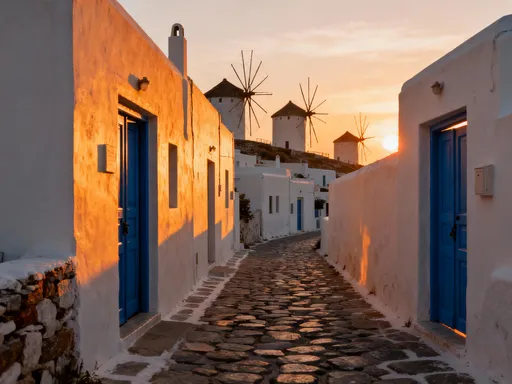
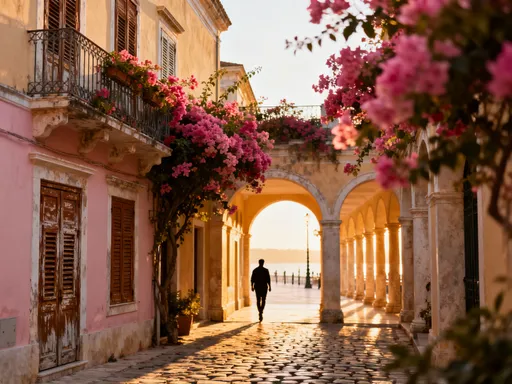
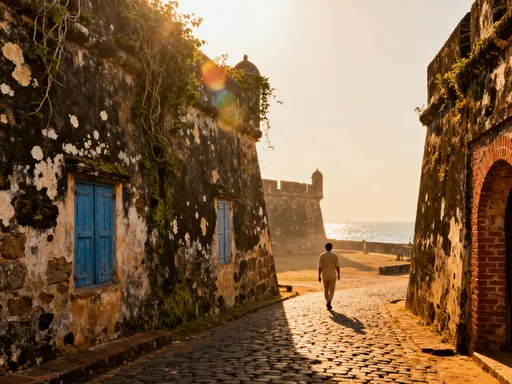
Entering the Old Town is like stepping into a meticulously preserved dream. The streets narrow into intimate passageways, paved with smooth, water-worn stones that echo with centuries of footsteps. Here, architecture is not merely functional—it is poetic. Venetian influence is everywhere: arched doorways frame glimpses of inner courtyards, pastel-hued buildings with peeling stucco reveal glimpses of history beneath their surfaces, and wooden shutters painted in deep blues and greens open to let in the golden Mediterranean light. The fusion of Greek sensibility and Italian design creates a visual harmony that feels both exotic and familiar.
One of the most iconic spaces in the city is the Liston, a colonnaded promenade built during the French occupation in the early 19th century, inspired by the arcades of Paris. By day, it is a quiet row of cafes where locals sip frappé coffee and watch the world pass by. But at golden hour, when the sun slants low and bathes the buildings in amber light, the Liston transforms. The arches cast long, dramatic shadows, and the pastel facades glow like something out of a Renaissance painting. It is here, seated at a small outdoor table with a view of the Spianada Square, that one begins to understand Corfu’s essence: a place where leisure, beauty, and history coexist effortlessly.
Photographers and artists are drawn to this part of town not just for its aesthetics, but for its authenticity. Unlike staged tourist destinations, Corfu Town remains a living community. Children play football in the square, grandmothers hang laundry between buildings, and the sound of church bells mingles with the laughter from open-air tavernas. This is not a performance—it is real life, unfolding in a setting so picturesque it feels unreal. The artistry of the city lies not only in its buildings but in the way people inhabit them, preserving a rhythm that time has not dulled.
Icons and Idols: The Spiritual Art of Byzantine Churches
Scattered throughout Corfu’s landscape are small, often unassuming churches that hold some of the island’s most profound artistic treasures. These sacred spaces, many dating back to the Byzantine and post-Byzantine periods, serve not only as places of worship but as living galleries of religious art. Inside their modest exteriors lie walls covered in frescoes, altars adorned with hand-painted icons, and ceilings that seem to open into the heavens through intricate gold-leaf detailing.
One of the most striking examples is the Church of Panagia Spiliotissa, perched on a rocky hillside just outside Corfu Town. To reach it, visitors climb a winding stone staircase, each step bringing them closer to both elevation and contemplation. The church itself is small, with a simple stone façade, but inside, the atmosphere shifts. Natural light filters through high windows, illuminating centuries-old frescoes that depict scenes from the life of Christ and the Virgin Mary. The colors—deep reds, royal blues, and shimmering golds—have softened with time, but their emotional power remains undiminished. Each brushstroke reflects devotion, not just artistic skill.
Orthodox iconography follows strict theological and stylistic traditions. Icons are not merely representations; they are considered windows into the divine. The elongated faces, solemn expressions, and symbolic use of color are all part of a visual language meant to inspire reverence and spiritual connection. In Corfu, many of these icons were painted by local artists trained in monastic schools, passing down techniques from generation to generation. The result is a body of work that is both deeply personal and universally sacred.
What makes these churches particularly moving is their integration into daily life. They are not sealed off behind ropes or glass cases. Locals enter quietly, light candles, and pray before the icons, their presence adding a layer of living devotion to the artistic experience. For the visitor, this offers a rare opportunity to witness art not as a distant object of admiration, but as a vital part of community and faith. The interplay of light, silence, and color creates moments of stillness that linger long after one has left.
Photographers are often drawn to these spaces for their dramatic lighting and rich textures. But the most powerful images are not those of grand altars or elaborate frescoes—they are the quiet details: a hand resting on a worn wooden pew, a single candle flickering in the dim light, the way sunlight catches the edge of a gold halo. These moments remind us that true artistry often resides in the ordinary, elevated by context and meaning.
Open-Air Museums: The Achilleion and Mon Repos Estate
If Corfu’s churches reflect its spiritual soul, then the Achilleion Palace and Mon Repos Estate speak to its aristocratic elegance and romantic imagination. Both are set against the island’s lush green hills and sparkling coastline, each telling a different chapter of Corfu’s layered history.
The Achilleion, perched on a hilltop in the village of Gastouri, was built in 1890 for Empress Elisabeth of Austria, also known as Sisi. A woman of great beauty and melancholy, she sought refuge in Corfu from the rigid constraints of court life. The palace, designed in neoclassical style, was her tribute to Achilles, the Homeric hero—symbolizing both strength and tragic fate. Statues of Achilles dominate the gardens, from the triumphant warrior in the front courtyard to the dying hero in the rear, capturing the duality of glory and vulnerability.
The interior of the Achilleion is equally evocative. Murals depict scenes from Greek mythology, and the ceilings are adorned with painted medallions and ornate moldings. The grand hall, with its sweeping staircase and crystal chandeliers, feels like a stage set for a 19th-century opera. Yet beneath the opulence lies a sense of longing. Sisi’s private chambers are modest in comparison, filled with personal mementos and portraits that speak of a woman searching for meaning beyond wealth and title.
After her death, the palace was purchased by Kaiser Wilhelm II of Germany, who used it as a summer residence. Today, it operates as a museum, offering visitors a glimpse into a world where art, power, and personal tragedy intersect. The gardens, with their marble terraces, fountains, and panoramic views of the island, remain one of Corfu’s most photogenic spots—especially at sunset, when the light turns the statues to gold.
Just a short drive away lies Mon Repos, a former royal villa nestled in a pine forest overlooking the sea. Originally built in the 19th century as a summer residence for the British High Commissioner, it later became the home of the Greek royal family. Unlike the grandeur of the Achilleion, Mon Repos exudes quiet elegance. The villa is surrounded by ancient olive trees and cypress groves, and its neoclassical architecture blends seamlessly with the natural landscape.
Today, Mon Repos houses an archaeological museum focusing on the region’s ancient history, particularly the nearby site of Palaiopolis, believed to be the location of ancient Corcyra. Artifacts include pottery, inscriptions, and architectural fragments that trace the island’s significance in classical antiquity. The estate also serves as a protected habitat for loggerhead sea turtles, connecting its cultural heritage with environmental stewardship.
Together, the Achilleion and Mon Repos illustrate how Corfu has long been a destination for those seeking beauty, inspiration, and escape. They are not just relics of a bygone era, but active spaces where history, art, and nature converge. For visitors, they offer a chance to walk in the footsteps of emperors and empresses, not to glorify power, but to reflect on the human desire to create meaning through beauty.
Street Art with a Story: Murals, Mosaics, and Local Craft
While Corfu’s grand monuments capture the imagination, its true artistic heartbeat can be found in the details—on village walls, along coastal paths, and in the quiet corners where local artisans practice their crafts. In recent years, a quiet renaissance has taken place, where traditional techniques meet contemporary expression in ways that honor the past while embracing the present.
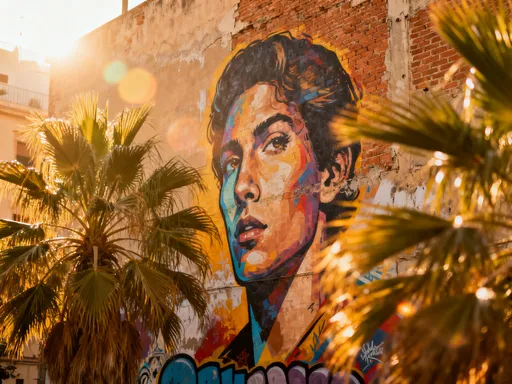
In the neighborhood of Kanoni, overlooking the famous Mouse Island, a series of hand-painted murals adorn the sides of old stone houses. These are not random graffiti, but carefully composed works that depict scenes from island life—fishermen mending nets, women hanging laundry, children playing in the square. Each mural is signed by a local artist, often a resident who grew up in the area. They serve as visual storytelling, preserving memories of a way of life that is slowly changing.
Along the coastal walking paths, another form of art emerges: fish-scale mosaics made from broken ceramic tiles. These shimmering patterns, created by community art projects, line the edges of seawalls and staircases, catching the sunlight like scattered jewels. Inspired by ancient Greek and Byzantine mosaic traditions, they are both decorative and symbolic—a reminder that beauty can arise from fragments, just as history is built from broken pieces.
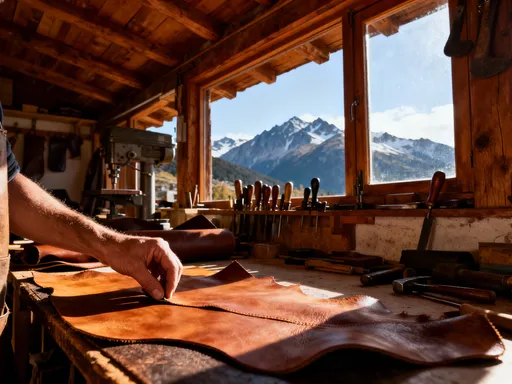
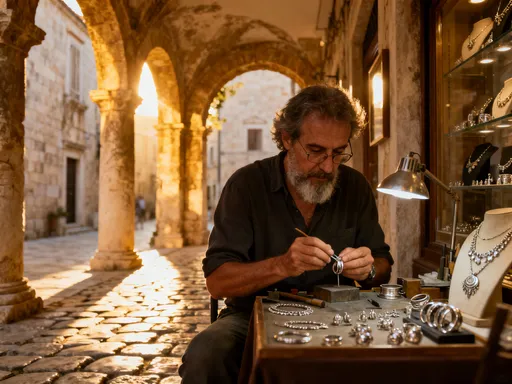
Equally important are the island’s craftspeople, many of whom work in small, family-run studios tucked away in narrow alleys. In the village of Lefkimi, for example, artisans still produce Corfiot lace, a delicate needlework tradition introduced by Venetian nuns centuries ago. The patterns—featuring waves, flowers, and geometric motifs—are painstakingly created by hand, each piece taking weeks to complete. Though no longer a common household skill, the craft is being revived through workshops and cultural festivals.
Ceramicists in villages like Nymfes and Spartylas continue to shape clay into tiles, plates, and decorative items using methods passed down for generations. Their glazes reflect the island’s palette—deep sea blues, sun-bleached whites, earthy terracottas. Some artists incorporate ancient Greek symbols into their designs, bridging mythology and modern aesthetics.
One of the most touching traditions is the painting of religious icons in small home studios. These artists, often self-taught, follow the same rules as their Byzantine predecessors: natural pigments, gold leaf, and a meditative approach to each stroke. Visitors can sometimes observe the process, watching as a blank wooden panel slowly transforms into a sacred image. These workshops are not commercial enterprises; they are acts of devotion, keeping a spiritual art form alive in a secular age.
What unites all these expressions is a deep respect for tradition. The murals do not shout for attention; they whisper stories. The mosaics do not dazzle with complexity; they glow with humility. And the craftspeople do not seek fame; they seek continuity. In a world increasingly dominated by mass production, Corfu’s handmade art is a quiet rebellion—a reminder that beauty takes time, and meaning is woven into every thread, tile, and brushstroke.
Festivals That Paint the Town: Easter, Carnival, and Musical Heritage
In Corfu, culture is not confined to museums or galleries—it spills into the streets, especially during festivals. These events are not staged for tourists; they are deeply rooted in local identity, passed down through families and communities. Each season brings its own rhythm, but two stand out for their artistic intensity: Easter and the Corfu Carnival.
Corfu’s Easter celebrations are among the most dramatic in Greece. On Good Friday, the entire island transforms into a stage of solemn beauty. Churches prepare ornate epitaphs—elaborate biers decorated with flowers, candles, and embroidered cloths—that are carried in processions through the towns and villages. In Corfu Town, the main procession involves dozens of brotherhoods, each bearing their own epitaph, accompanied by philharmonic bands playing mournful dirges. As the cortège moves through the streets, the air fills with the scent of jasmine and incense, and the sound of music echoes off stone walls.
What makes this event artistically powerful is its fusion of music, craftsmanship, and collective emotion. The epitaphs are not mere replicas; they are unique works of art, some taking months to prepare. The floral arrangements follow symbolic patterns—white for purity, red for sacrifice—and the embroidery often includes scenes from the Passion. The music, performed by the island’s historic Philharmonic Societies, is equally precise. These ensembles, some dating back to the 19th century, have preserved a tradition of wind and brass performance that is rare in the rest of Greece.
By contrast, the Corfu Carnival, held in February, is a burst of color, satire, and theatricality. Inspired by Venetian masquerade traditions, it features parades with elaborate floats, masked performers, and satirical performances that mock politics and social norms. The highlight is the “Ballo in Maschera,” a masked ball held in the Liston, where guests in elaborate costumes dance the night away. The carnival’s spirit is playful, but its roots are deep—reflecting Corfu’s historical ties to Italy and its long-standing love of performance.
Music, in fact, is one of Corfu’s most enduring art forms. The island boasts multiple philharmonic societies, including the famous Philharmonic Society of Corfu, founded in 1840. These groups train young musicians from childhood, ensuring that classical and traditional music remain alive. Their concerts, often held in open-air settings during the summer, draw both locals and visitors, creating moments of shared cultural appreciation.
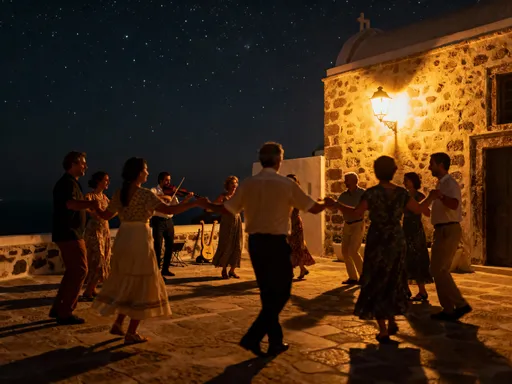
For the visitor, participating in these festivals is not about observation—it is about immersion. Joining a procession, listening to a midnight concert, or dancing at a village festival allows one to feel the pulse of Corfu’s artistic soul. These are not performances for an audience; they are rituals of belonging, where art and community are inseparable.
Photogenic Perspectives: Best Spots for Capturing Culture and Light
For those who wish to capture Corfu’s artistic essence through photography, timing and perspective are everything. The island offers endless opportunities, but the most meaningful images come not from chasing landmarks, but from noticing the interplay of light, texture, and daily life.
One of the most iconic spots is Mouse Island, a tiny islet connected by a stone bridge in Kanoni. At sunrise, when the sky shifts from indigo to soft pink, the two white churches on the island glow like lanterns. The reflection in the calm water doubles the image, creating a symmetry that feels almost surreal. Photographers often crowd here at dawn, but those who wait a little longer are rewarded with solitude and the gentle movement of fishing boats entering the bay.
The Old Fortress, rising from the sea at the northern tip of Corfu Town, offers panoramic views of the city and coastline. Visiting at blue hour—just after sunset—reveals the city lights slowly flickering on, while the sky above deepens into twilight. The contrast between the ancient stone walls and the modern cityscape below creates a powerful narrative of time and continuity.
In the villages, the best moments happen spontaneously. In Asinou or Spartylas, narrow lanes lined with bougainvillea-covered houses come alive in the late afternoon, when the sun slants through the archways and illuminates laundry hanging between buildings. These are not staged scenes—they are fragments of real life, rich with texture and color. Capturing them requires patience and respect, waiting for the right light without intruding on privacy.
For those interested in detail, Corfu offers endless subjects: the peeling paint on a wooden shutter, the grain of weathered stone, the weave of a lace tablecloth, the glint of gold leaf on an icon. These close-up images often tell more about the island’s character than wide-angle landscapes. Using natural light—especially the soft, diffused glow of early morning or late afternoon—enhances the authenticity of the shot.
Modern photography tools can be helpful, but the most powerful images come from observation, not equipment. Turning off filters, avoiding excessive editing, and focusing on genuine moments allow the island’s true beauty to shine. After all, Corfu does not need enhancement—it is already a masterpiece in motion.
Beyond the Postcard: Choosing Meaningful Cultural Experiences
In an age of fast travel and instant imagery, it is easy to reduce Corfu to a collection of postcard views. But the island’s true value lies not in what we photograph, but in what we take home in our hearts. To truly connect with its artistic soul, one must move beyond sightseeing and into participation.
Several local initiatives offer immersive experiences that deepen understanding. Painting workshops, often led by resident artists, invite guests to try their hand at watercolor or icon painting, using traditional methods and local motifs. These are not about creating masterpieces, but about slowing down, observing, and engaging with the creative process. Similarly, lace-making classes allow visitors to learn the delicate stitches of Corfiot embroidery, gaining appreciation for the patience and precision behind each piece.
Attending a live concert by one of the philharmonic societies is another way to connect. Held in historic squares or churches, these performances are not just musical events—they are cultural rituals. Listening to a brass ensemble play a 19th-century march under the stars creates a sense of continuity, linking past and present through sound.
For those interested in preservation, some organizations offer introductory sessions on icon restoration or traditional building techniques. These are not tourist attractions, but educational opportunities that support ongoing conservation efforts. By learning how to clean a painted surface or repair a stone wall, visitors contribute to the island’s cultural sustainability in a tangible way.
Ultimately, Corfu teaches us that art is not something to be consumed, but something to be lived. It is in the way a grandmother folds a napkin with lace trim, the way a fisherman paints his boat, the way a church bell rings across the hills at dusk. These are the quiet expressions of a culture that has learned to turn everyday life into art.
As travelers, we have a responsibility to engage with such places respectfully—to look deeply, listen closely, and participate with humility. Corfu does not need us to change it; it invites us to see it clearly. And in doing so, we may find that the island changes us—not by spectacle, but by stillness, by beauty, by the quiet revelation that art, at its best, is simply another word for home.