You Won’t Believe These Okinawa Spots — Art, Culture, and Hidden Photo Magic
Okinawa isn’t just beaches and sunshine — it’s a vibrant blend of Ryukyuan soul, colorful street art, and cultural gems waiting to be captured. I hit the islands with my camera, hunting for moments where tradition meets creativity. What I found blew my mind: quiet alleys humming with history, temples wrapped in coral stone, and contemporary art breathing new life into old spaces. This is Okinawa beyond the brochures — authentic, artistic, and absolutely unforgettable.
The Heartbeat of Okinawa: Where Culture Becomes Visual Poetry
Okinawa pulses with a cultural rhythm unlike any other in Japan. At its core is the Ryukyuan heritage — a distinct identity shaped by centuries of maritime trade, spiritual practices, and artistic expression. This heritage isn’t confined to museums or history books; it lives in the way elders move during Eisa drumming, in the vibrant patterns of Bingata textiles, and in the quiet dignity of family tombs nestled among the trees. For the thoughtful traveler and photographer, this cultural continuity offers a rare opportunity: to witness and capture traditions that are both preserved and evolving.
One of the most powerful symbols of this cultural heartbeat is Shuri Castle, once the royal seat of the Ryukyu Kingdom. Though largely destroyed during World War II and painstakingly rebuilt, the castle remains a living monument to resilience. Its red-lacquered gates and intricate stone carvings reflect a blend of Chinese, Japanese, and indigenous design, telling a story of cultural synthesis. Photographers are drawn to its sweeping courtyards and arched bridges, especially in the golden hour when sunlight glows against the coral-limestone walls. Yet the most meaningful images often come not from grand vistas, but from quiet details: a single incense coil curling into the sky, or a child’s hand resting on an ancient balustrade.
What makes Okinawa’s cultural landscape so visually rich is how seamlessly tradition integrates into daily life. Unlike destinations where heritage is performed for tourists, here it is lived. Women in traditional attire visit ancestral tombs not as a spectacle, but as an act of devotion. Local festivals unfold in neighborhood streets, not on commercialized stages. This authenticity translates into photography that feels intimate and truthful. When you photograph Eisa dancers mid-performance, you’re not capturing a reenactment — you’re documenting a spiritual release, a rhythmic cry passed from generation to generation. The key is patience and respect: wait for the moment when the mask lifts, not to expose, but to understand.
Bingata dyeing, a centuries-old textile art, is another window into Okinawa’s creative soul. Using natural dyes and intricate stencils, artisans create bold, floral patterns that reflect the island’s tropical environment. Visiting a small workshop in Naha or Kumejima offers not only stunning photo opportunities — the contrast of vivid cloth against weathered wooden looms, the focused hands of a master dyer — but also a chance to learn about the symbolism behind each design. Peacocks, chrysanthemums, and ocean waves aren’t merely decorative; they carry wishes for prosperity, longevity, and protection. These details enrich the visual narrative, turning a simple photograph into a story with depth.
Naha’s Backstreets: Murals, Markets, and the Pulse of Local Life
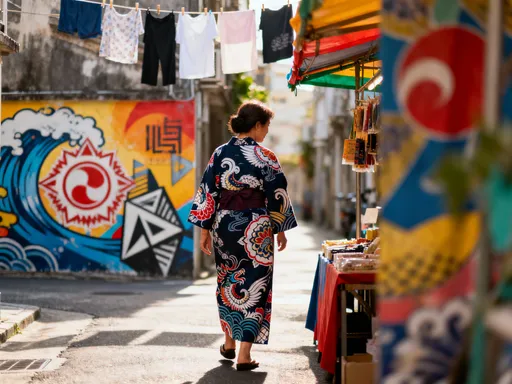
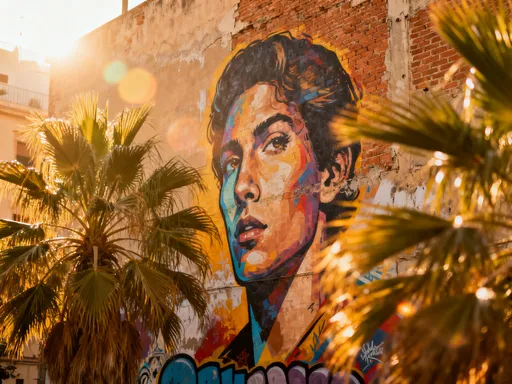
While Kokusai Street draws crowds with its souvenirs and snacks, the true artistic pulse of Naha beats in the narrow alleys just off the main drag. Here, concrete walls have become open-air galleries, painted with murals that celebrate island pride, environmental awareness, and the quiet beauty of everyday life. These aren’t random graffiti tags; they are intentional works by local artists who see public art as a form of cultural dialogue. One mural might depict a grandmother weaving banana fiber, another a sea turtle gliding through coral reefs — each image a love letter to Okinawa’s past and future.
Walking these backstreets feels like stepping into a living sketchbook. The colors are bold, the compositions thoughtful, and the messages often subtle. A painting of a lone fisherman on a breakwater might seem simple, but it speaks to the island’s deep connection to the sea — a relationship that sustains families and shapes identity. Photographers can capture striking contrasts: the vibrant mural against a rusted metal door, a child’s scooter parked beneath a painted phoenix, or morning light slicing through a narrow passage to illuminate a single kanji character. These moments don’t require elaborate gear; sometimes a smartphone is enough to preserve the quiet poetry of the scene.
Just a few blocks away, Makishi Public Market offers a different kind of visual feast. This bustling indoor-outdoor market is where Okinawa’s culinary and cultural diversity comes alive. Rows of fish stalls display glistening amberjack, spiny lobsters, and sea grapes, their colors intensified under fluorescent lights. Vendors in aprons call out greetings, their faces lined with years of early mornings and hard work. Baskets overflow with bitter melon, purple sweet potatoes, and exotic fruits like shikuwasa and dragon fruit — a rainbow of edible art. For photographers, this is a paradise of texture, movement, and human connection.
The best time to visit is early morning, between 7:00 and 9:00 a.m., when the market is fully stocked and the light is soft. This is when you’ll find the most authentic interactions: a grandmother haggling over squid prices, a chef selecting fresh tuna for his restaurant, or a young couple laughing as they sample pickled ginger. To photograph respectfully, move slowly, smile, and ask permission when focusing on individuals. Often, a simple nod or a shared laugh is all the consent you need. The goal isn’t to take, but to witness — to capture not just the market’s vibrancy, but its heartbeat.
Art Islands: Zamami and Taketomi’s Aesthetic Escapes
Just a short ferry ride from Naha lie the Kerama Islands, where turquoise waters and powdery beaches are only part of the story. Zamami, a small island with a population under 700, has quietly become a haven for artists and contemplative travelers. Scattered along its coastal paths are small galleries and outdoor installations — driftwood sculptures shaped like sea creatures, ceramic wind chimes hanging from banyan trees, and painted stones nestled among the roots. These works don’t dominate the landscape; they complement it, inviting viewers to pause and reflect.
Photographing Zamami is an exercise in minimalism and mindfulness. The island’s natural beauty is so overwhelming that the best images often come from restraint: a single red umbrella left on the sand, a fisherman’s net draped over a wooden post, or the reflection of clouds in a tidal pool. The light here has a clarity that enhances every hue — the green of sea urchins, the blue of the horizon, the white foam of distant waves. For those seeking solitude, the trail to Ama Beach offers panoramic views and the chance to capture sea turtles basking in the shallows. No flash, no drone — just stillness and observation.
Further south, Taketomi Island feels like stepping into a preserved village from another era. With its red-tiled roofs, hand-laid coral stone paths, and water buffalo carts, the island is a living museum of traditional Ryukyuan architecture. Yet it is far from frozen in time. Local artisans open their homes as small studios, weaving intricate *sakishima* patterns into fabric using banana and pineapple fibers. These geometric designs, passed down through generations, are not just decorative — they represent clan identities and natural elements like wind and water.
For photographers, Taketomi offers naturally composed scenes at every turn. The low height of the buildings creates wide, unobstructed skies, perfect for capturing sunrises and star trails. The narrow alleys, lined with hedges of hibiscus and jasmine, guide the eye toward unexpected details: a cat sleeping on a doorstep, a woven basket hanging by a gate, or a child’s drawing taped to a window. Because motor vehicles are restricted, the island moves at a human pace, allowing for unhurried observation. The best approach is to walk slowly, camera in hand but not always raised — sometimes the most powerful image is the one you carry in memory, not on a memory card.
Contemporary Canvas: Museums and Creative Hubs in Naha and Ginowan
While Okinawa’s beauty unfolds outdoors, its modern artistic spirit thrives indoors as well. The Okinawa Prefectural Museum & Art Museum in Naha serves as a cultural anchor, offering rotating exhibitions that explore everything from ancient pottery to contemporary installations. The building itself, with its glass walls and open courtyards, reflects a design philosophy that honors both tradition and innovation. Inside, visitors encounter works by Okinawan artists who use mixed media — textiles, sound, video — to examine themes of identity, memory, and resilience.
One recent exhibition featured a life-sized replica of a wartime shelter, lined with personal letters and photographs from survivors. Another displayed a series of large-scale paintings inspired by Eisa drum patterns, translated into abstract color fields. These exhibits offer not only visual inspiration but also emotional depth, reminding viewers that art in Okinawa is often born from both joy and sorrow. For photographers, the museum provides a rare opportunity to capture creative expression in controlled light, away from the glare of midday sun. However, flash photography is typically prohibited, encouraging a slower, more attentive way of seeing.
Outside the formal museum space, creative energy spills into independent hubs like Caizan Studio in Ginowan. Housed in a converted warehouse, this artist collective supports local creators through workshops, exhibitions, and residency programs. The space buzzes with activity — painters at easels, ceramicists shaping clay, musicians recording in a soundproof room. Visitors are welcome to wander, observe, and even participate in drop-in classes. The atmosphere is informal, collaborative, and deeply inspiring. Photographs taken here often capture motion and process: hands throwing pots, brushes sweeping across canvas, or dancers rehearsing in a sunlit studio.
What makes these spaces valuable for travelers is their accessibility. Unlike elite galleries in major cities, Caizan and similar studios encourage interaction. Artists are often happy to explain their work, share their influences, or recommend other hidden creative spots. This openness transforms photography from a solitary act into a shared dialogue. Instead of simply documenting art, you begin to understand it — and in doing so, your images gain context and meaning. On rainy days or during the hottest hours, these indoor havens offer not just shelter, but enrichment.
Sacred Light: Photographing Temples, Tombs, and Ritual Spaces
Okinawa’s spiritual landscape is as visible as its physical one. Scattered across the islands are sacred sites — some grand, others nearly invisible — that reflect the indigenous Ryukyuan belief system, which centers on ancestor veneration and harmony with nature. Sefa-utaki, a UNESCO World Heritage site near Nanjo, is one of the most revered. Once a royal prayer ground, it consists of natural rock formations, stone altars, and towering trees draped in sacred shimenawa ropes. Sunlight filters through the canopy in golden beams, creating an atmosphere of quiet awe.
Photographing such places requires more than technical skill; it demands mindfulness. These are not tourist attractions, but active sites of worship. The best approach is to move quietly, speak softly, and avoid using flash or tripods. Wide-angle lenses can capture the scale of the space, while macro settings reveal the details: moss growing on stone offerings, a folded prayer slip tucked into a crevice, the texture of weathered wood. The most powerful images often come from restraint — a single shaft of light on an altar, the shadow of a tree branch on a stone path, or the silhouette of a visitor bowing in prayer.
Family tombs, known as *haka*, are another intimate expression of Okinawan spirituality. Unlike Western cemeteries, these tombs are often located near homes or along rural roads, integrated into daily life. Built from coral stone and shaped like miniature houses, they reflect the belief that ancestors remain part of the family. During Obon season, families clean the tombs, offer food, and light incense — rituals that are deeply personal. Photographing these moments should be done with extreme care. Always ask permission, keep your distance, and avoid close-ups of grieving relatives. Instead, focus on symbolic elements: a tray of oranges left at the entrance, a bouquet of white lilies, or the reflection of clouds in a still puddle beside the tomb.
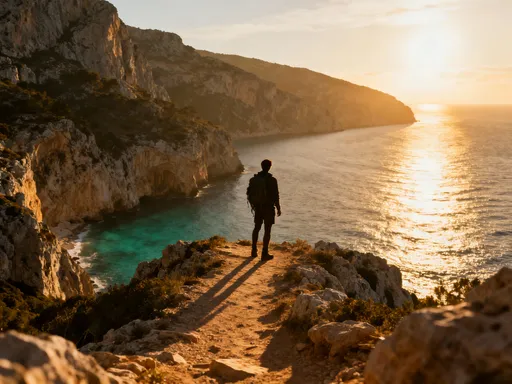
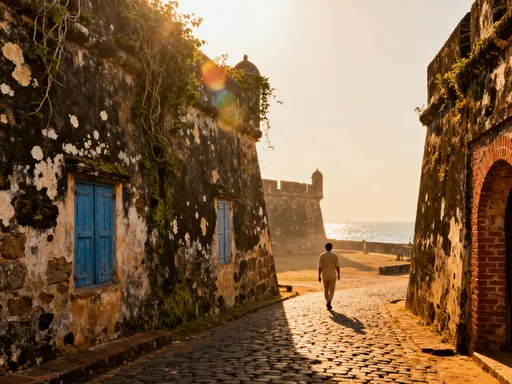
Nakijin Castle ruins, perched on a cliff overlooking the East China Sea, offer another blend of history and spirituality. Though only stone foundations remain, the site radiates a quiet power. At sunrise, the ocean glows pink, and the wind carries the scent of salt and wildflowers. Photographers gather not for dramatic ruins, but for the feeling — the sense of time suspended, of stories whispered by the stones. These images, when taken with reverence, become more than souvenirs; they become meditations on memory, loss, and continuity.
Festivals in Frame: Eisa, Floats, and the Rhythm of Celebration
No visit to Okinawa is complete without experiencing its festivals, where culture explodes in sound, color, and motion. The Eisa Festival, held each summer, is the most iconic. Originating as a Bon dance to honor ancestors, it has evolved into a dynamic street performance featuring drummers, dancers, and acrobats. In Naha, hundreds of performers in traditional costumes — headbands, happi coats, and straw sandals — march through the streets, their drums pulsing like a collective heartbeat. The energy is electric, the visuals unforgettable.
For photographers, Eisa offers endless opportunities: the intense focus in a drummer’s eyes, the blur of motion as dancers spin, the glow of torchlight on sweat-slicked skin. To capture these moments effectively, preparation is key. Arrive early to secure a good vantage point, ideally near a corner where the procession slows. Use a fast lens (f/2.8 or wider) to handle low light, and experiment with slow shutter speeds (1/15 to 1/4 second) to convey movement. A monopod can help stabilize longer exposures without obstructing others. But technical skill is only half the equation — the other half is respect.
These are not performances for entertainment; they are acts of cultural preservation. Many participants are young people keeping their grandparents’ traditions alive. Avoid intrusive behavior — no pushing, no flash during solemn moments, no touching costumes or instruments. Instead, engage with kindness: smile, bow, and if invited, join a circle dance. Your photographs will be richer for it, infused with the warmth of human connection. Other festivals, like the Naha Hari boat races, offer similar energy. The sight of long dragon boats slicing through the water, rowers in unison, their shouts echoing across the bay, is both thrilling and deeply symbolic of community strength.
Documenting these events isn’t just about capturing action; it’s about understanding context. Talk to locals, read festival programs, and learn the meanings behind the dances and chants. When you know that a particular drumbeat calls the ancestors home, or that a float’s design honors a village’s fishing heritage, your images gain layers of meaning. Photography becomes not just observation, but participation.
Beyond the Lens: How Photography Deepens Cultural Connection
What began as a quest for beautiful images often becomes something deeper: a journey into the heart of Okinawan values. The more time I spent with my camera, the more I realized that photography, at its best, is not about taking, but about receiving. Each click was an invitation to slow down, to listen, to notice the small things — the way an elder’s hands folded a rice ball, the sound of waves at dawn, the quiet pride in a potter’s eyes as she shaped clay into a cup. These moments weren’t staged; they were shared.
Okinawa teaches the value of *uchi-nan chu* — a sense of community, mutual care, and belonging. It’s visible in the way neighbors gather to repair a roof, how strangers offer directions without hesitation, and how artists welcome visitors into their studios. When you photograph with this spirit in mind, your images reflect more than scenery; they reflect relationship. They show not just what Okinawa looks like, but what it feels like.
To truly connect, I began pairing my photo walks with hands-on experiences. I joined a weaving workshop in Taketomi, learned to shape *goya champuru* with a local cook, and even tried my hand at Eisa drumming. These moments didn’t yield the most publishable photos — my clumsy drumming was more comical than artistic — but they opened doors. The women in the weaving class laughed at my mistakes, then patiently corrected my grip. The chef let me taste every dish, adjusting spices until I could taste the balance. These interactions, captured not on film but in memory, became the soul of my journey.
So as you plan your own Okinawa adventure, I encourage you to explore mindfully. Let your camera guide you, but don’t let it separate you. Put it down often. Breathe in the salt air. Sit with a cup of jasmine tea. Listen to the stories elders tell. Seek not just the perfect shot, but the perfect moment — the one where you feel, however briefly, like you belong. Because Okinawa’s greatest magic isn’t in its photo spots; it’s in its people, its spirit, and the quiet way it welcomes you home.